





THE SIGNATURE DETAIL
THE SMALLEST COMPONENT CAN REVEAL THE STANDARD OF THE WHOLE.
The smallest component can reveal the standard of the whole.
A button is easy to overlook. It performs a familiar function, occupies very little space and rarely determines whether someone notices a garment from across the room.
That is precisely why it matters.
At Ringo Reiner, the details that receive the least attention from the world should withstand the closest attention from the wearer.
Wherever a Ringo Reiner piece has a top button, it will carry our four-blade signature. The remaining buttons on the placket use a quieter, standard four-hole design.
Together, they form a system: one detail carries the story while everything around it remains restrained.
Not decoration. Not a conventional logo.
A quiet indication that the garment—and the man wearing it—has been prepared with intention.
THE ORIGIN
A REFERENCE TO FLIGHT, DRAWN WITH RESTRAINT
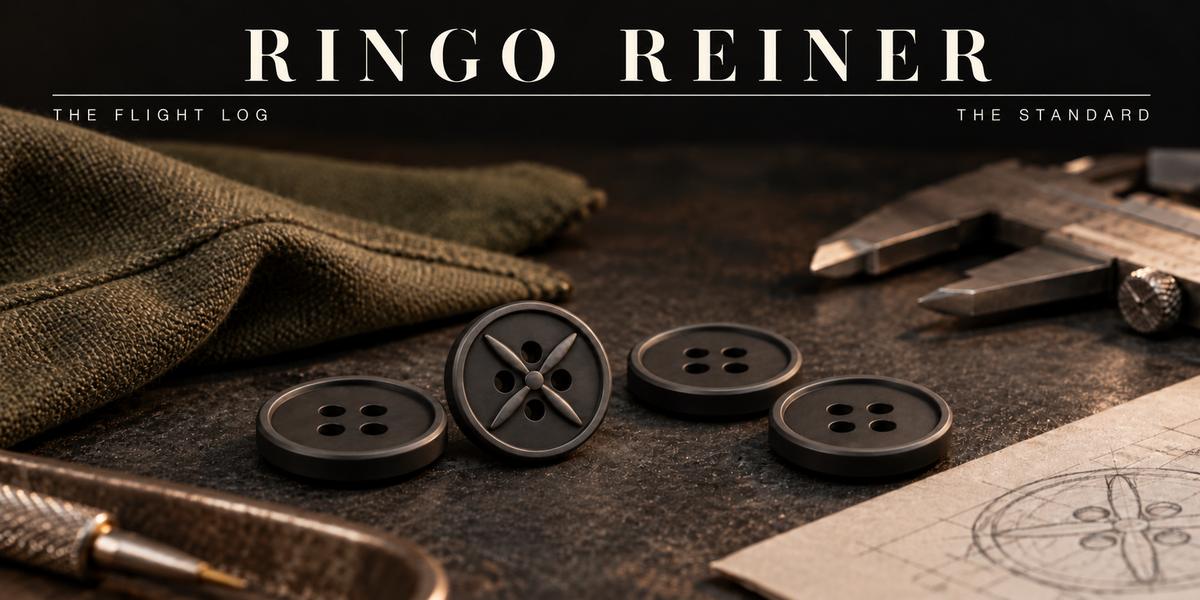
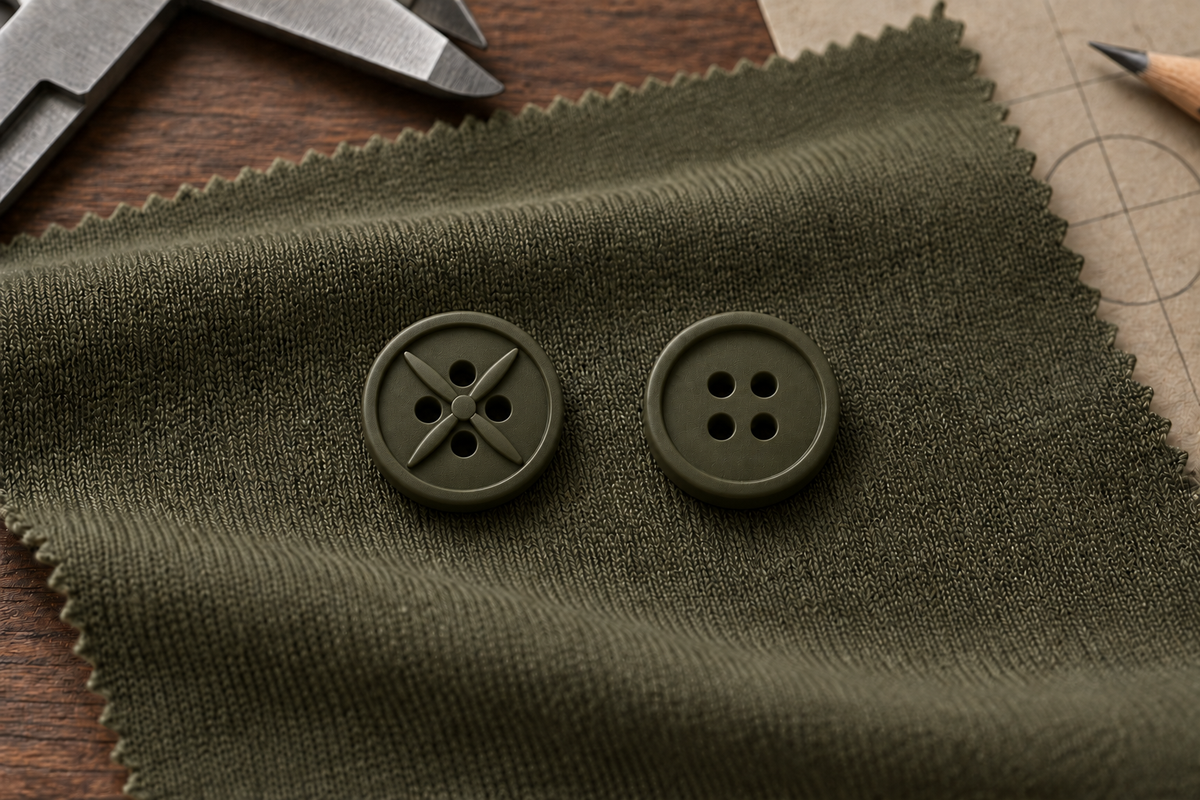
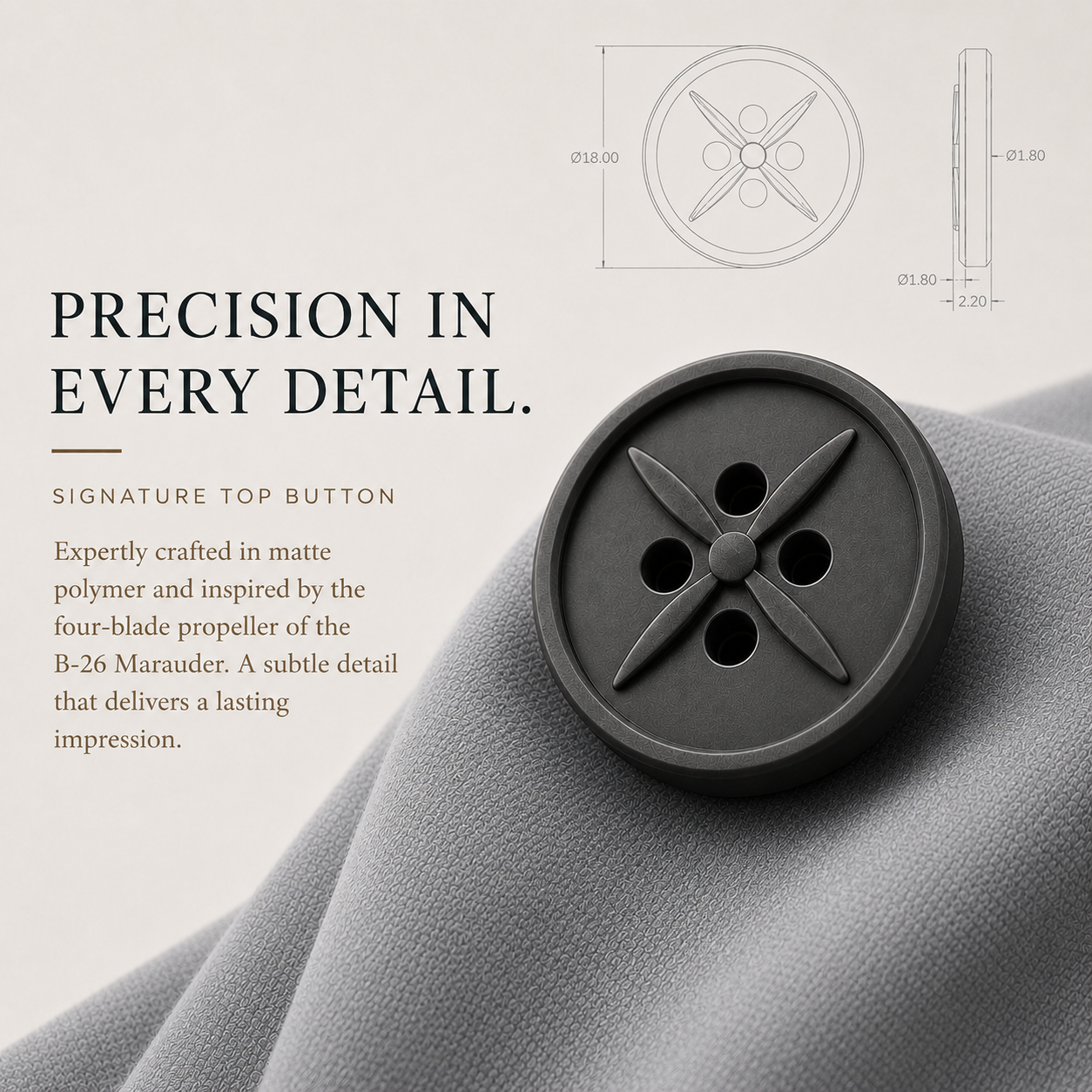
The face of the signature button is formed by four raised blades arranged around its center.
The geometry takes its influence from the propeller aircraft flown by Richard “Ringo” Reiner during his service in the United States Army Air Corps. But it was never intended to become an aviation costume or an obvious badge.
The reference has been reduced to its essential qualities: balance, precision, movement and purpose.
Those same qualities guided Ringo throughout his life—as an aviator, jeweler, craftsman, golfer and gentleman. Preparation mattered. Proportion mattered. The smallest component mattered because it contributed to the integrity of the whole.
The button carries that history forward without asking the wearer to explain it.
To most people, it is simply a beautifully considered detail.
To those who know, it means more.
THE BUTTON SYSTEM
ONE SIGNATURE. EVERYTHING ELSE RESTRAINED.
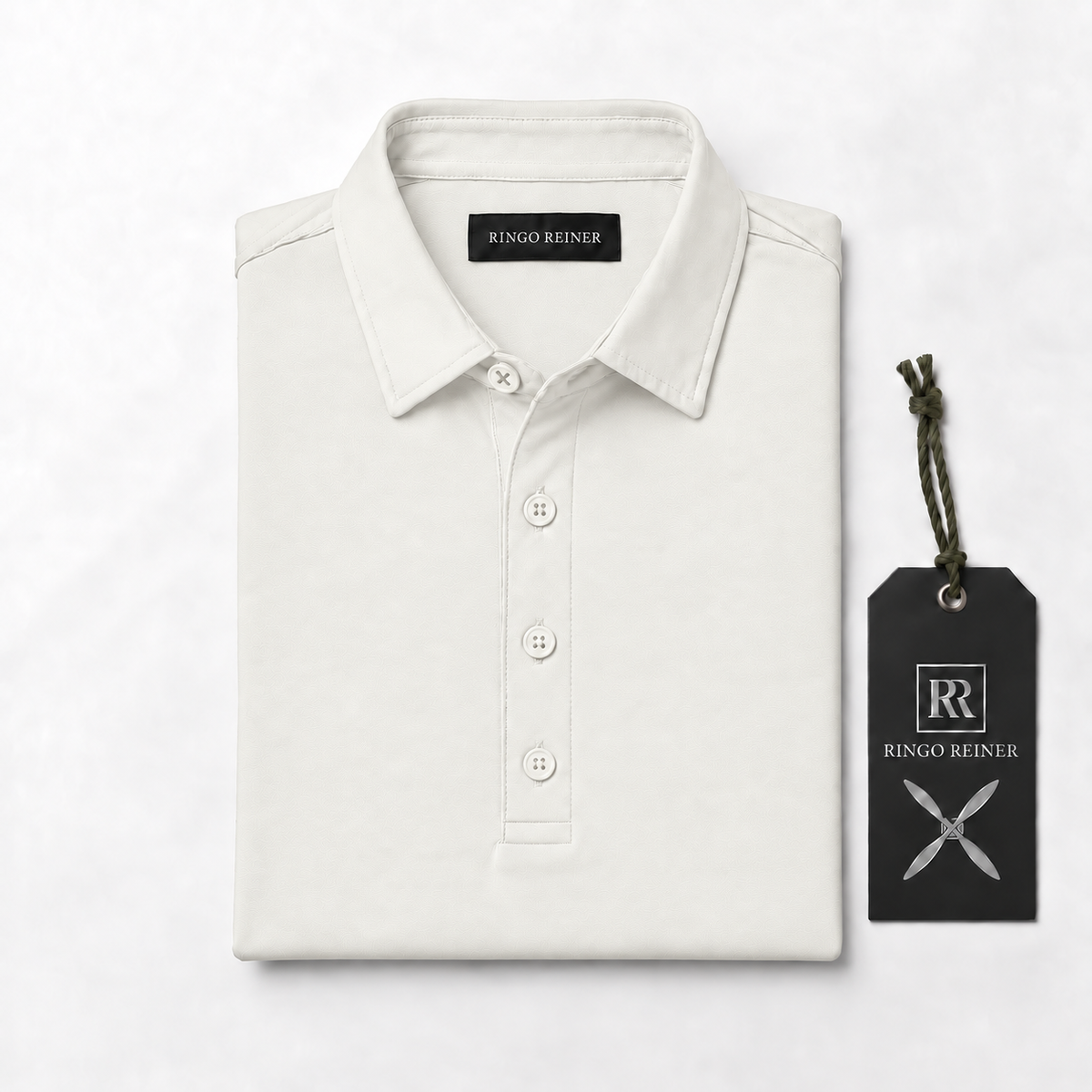
On the Founder Polo’s four-button placket, one four-blade signature button leads; three restrained tonal four-hole buttons complete the line. Across future pieces, the hierarchy remains consistent: signature at the top, restraint beneath it.
The signature button was never designed to compete with the garment.
It occupies the top position because that is where the collar and placket meet—the point at which proportion, construction and presentation become most visible.
The standard buttons below it are deliberately quieter. They share the same diameter, tonal color and matte material language, allowing the entire placket to read as one composed design.
Only the face changes.
The top button carries the four-blade Ringo Reiner signature. The remaining buttons use a clean four-hole form that supports the garment without repeating the symbol unnecessarily.
This distinction matters.
Repeating the signature down the full placket would turn it into ornament. Using it once gives the detail authority.
Recognition should be earned at close range.
THE RINGO STANDARD
“A signature should deepen the garment—not compete with the man wearing it.”
TONAL BY DESIGN
DISTINCTION THAT DOES NOT NEED TO ANNOUNCE ITSELF
The buttons are designed to belong naturally to each garment.
Their color remains tonal. Their finish remains matte. Their scale is consistent from the signature button to the standard buttons beneath it.
A contrasting button would announce itself from across the room.
A tonal button asks for a closer look.
As light passes across the raised four-blade surface, the signature becomes visible through relief and shadow rather than through a louder color, polished metal or oversized mark.
This protects the composition of the garment. The eye first reads the collar, the line of the placket, the fabric and the man wearing it.
Only afterward does the signature reveal itself.
That is the Ringo Reiner expression of confidence: present but never performative.
MATERIAL AND EXECUTION
A SMALL DETAIL STILL HAS TO PERFORM
Meaning does not excuse poor function.
The button must feel natural beneath the fingers, pass cleanly through its buttonhole and sit correctly against the fabric. Its edges must be resolved. Its surface must respond quietly to light. Its raised geometry must remain clear without feeling ornamental.
Installation matters just as much as design.
Thread should remain tonal. Tension should be consistent. Each button should sit squarely within the placket without pulling, twisting or distorting the surrounding fabric.
It is not enough to produce one beautiful development sample.
The result must be documented and executed consistently from one garment to the next. That is the difference between an interesting idea and a product standard.
Quality should never be a fortunate outcome.
It should be a controlled one.
THE RITUAL
THE FIRST DETAIL A MAN TOUCHES
There is a familiar moment before something important begins.
A man dresses for a presentation. An early flight. A first tee time. Dinner with someone whose company matters. He fastens his shirt, adjusts his collar, puts on his watch and takes one final look before leaving.
The signature button becomes part of that quiet ritual.
It does not transform him into someone else. Clothing cannot manufacture character.
But a considered garment can reinforce the habits he already values: preparation, composure, courtesy and attention to the moment ahead.
He dresses well because the people he will meet—and the time they will share—deserve that consideration.
The button is a small reminder of that standard, placed exactly where the act of getting ready begins.

A QUIET CODE
FOR THOSE WHO NOTICE
The strongest brand signatures do not always require a visible name.
Over time, the four-blade top button will appear across Ringo Reiner pieces as a quiet point of recognition. Different fabrics, colors and garments may surround it, but the principle remains consistent.
One signature button at the top.
Restrained tonal buttons below.
A man wearing it does not need to explain where it came from. Its purpose is not to seek approval or advertise status.
It is there for him—and for others who recognize what it represents.
Preparation before appearance.
Purpose before ornament.
Standards maintained even when no one else is looking.
THE CLOSER LOOK
THE MORE YOU NOTICE, THE MORE THE STANDARD SHOULD HOLD UP
Ringo understood this principle through his work as a jeweler and craftsman.
A piece could appear resolved from a distance, but its true quality was revealed under closer examination—in its proportion, construction, finish and the integrity of the details most people might never notice.
The same belief guides Ringo Reiner.
The customer may first encounter the garment through its silhouette, color or fabric. Later, he notices the structure of the collar, the proportion of the placket and the signature button positioned at its top.
The product becomes more meaningful as it becomes more familiar.
That is how a detail earns its place.
Not by demanding attention, but by continuing to reward it.
CARRYING THE STANDARD FORWARD
A SYMBOL OF HOW A MAN PREPARES
The four-blade button is not intended to tell the world everything about the man wearing it.
It says something quieter.
He notices details. He values preparation. He understands that dressing well is not about becoming the most visible person in the room. It is about arriving ready for the people, places and responsibilities that await him.
The top button carries the story.
The standard buttons below allow the garment to remain composed.
Together, they express a central Ringo Reiner belief:
Distinction should be discovered—and every detail must earn its place.
Read more

The PGA Professionals Who Carry the Game Forward
Across golf shops, practice ranges, first tees and clubhouses, PGA Professionals lead through preparation, service, judgment and respect for the game. They are among the men and women carrying the ...
Read more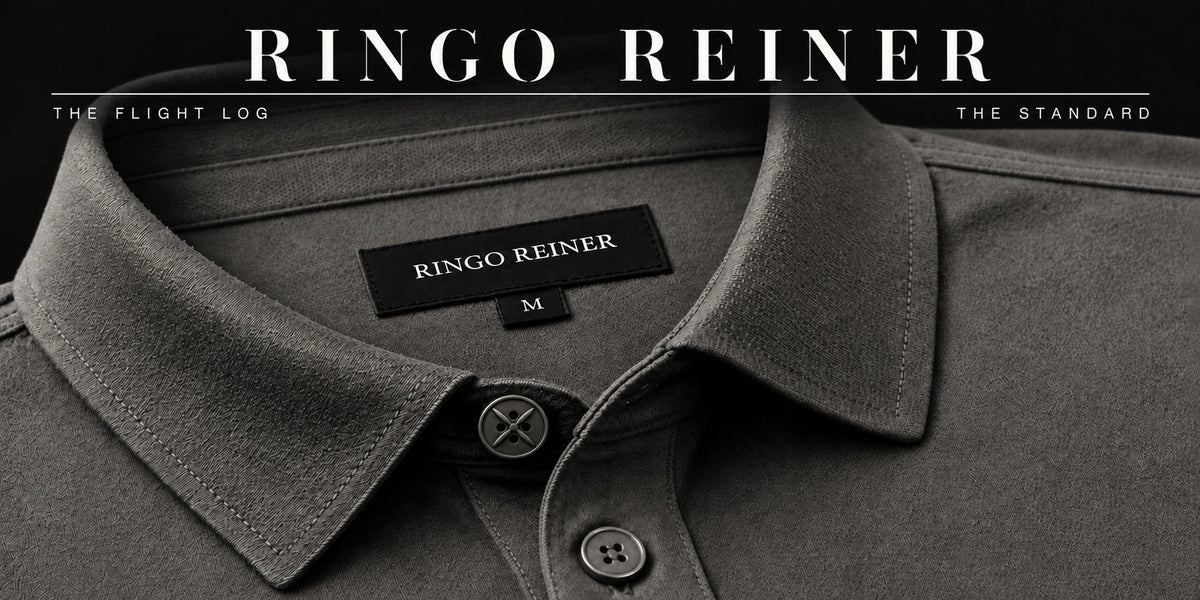
A polo collar should remain composed without demanding attention. Discover how thoughtful architecture, proportion, and integrated collar stays help the Founder Polo hold its line throughout the day.
Read more