



THE B-26 MARAUDER
More Than the Airplane He Flew
The B-26 Marauder occupies a distinctive place in the Ringo Reiner story.
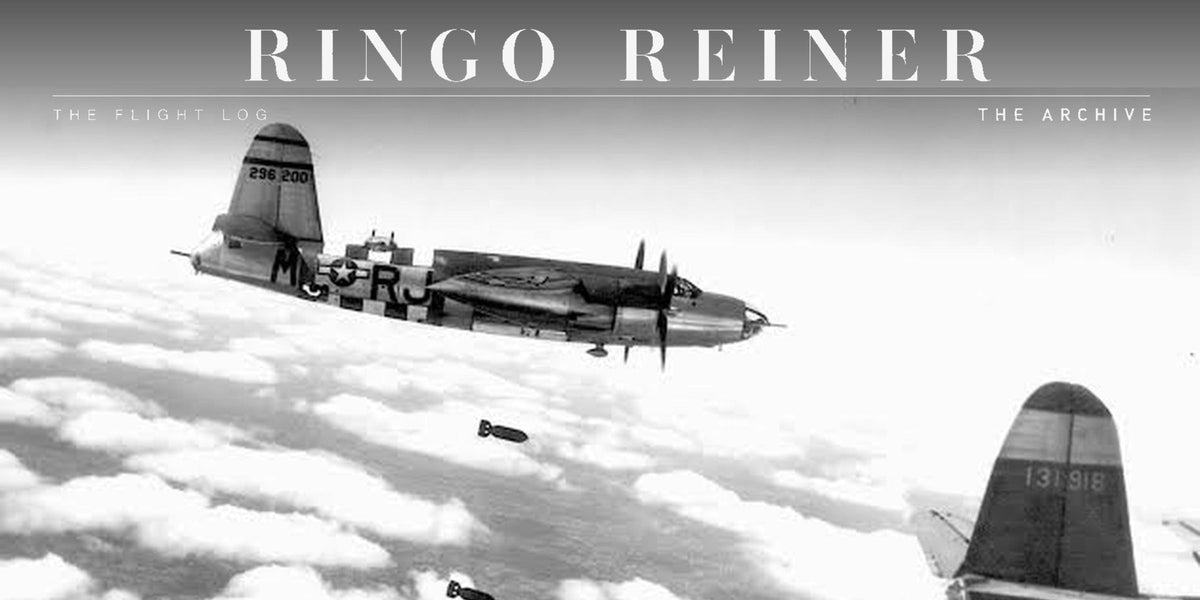
Richard “Ringo” Reiner flew the aircraft while serving in the United States Army Air Corps during World War II. That fact alone gives the B-26 a genuine connection to the man behind the brand.
But its importance to Ringo Reiner goes deeper than history.
Aviation is a world where preparation matters. Systems must work together. Procedures have a purpose. Small details cannot simply be assumed. The quality of the outcome depends on decisions made long before the aircraft ever leaves the ground.
Those principles feel remarkably familiar to the way we think about making a garment.
Not because a polo and an airplane are comparable objects.
But because both remind us of something important:
The whole is only as dependable as the decisions behind it.
That is why the B-26 appears throughout Ringo Reiner.
Not as decoration.
Not as nostalgia.
But as a reference to a standard of preparation, precision and purpose that began long before there was ever a clothing brand.

THE MARAUDER
An Aircraft That Demanded Respect
The Martin B-26 Marauder was a twin-engine medium bomber built for speed and precision during the Second World War.
Its performance came with expectations.
The B-26 required pilots and crews to understand the aircraft, respect its operating limits and execute procedures with discipline. Flying it well was not simply a matter of instinct. Preparation, communication and familiarity with the machine mattered.
That makes the Marauder an especially fitting part of Ringo’s story.
The aircraft was a system. Engines, controls, instruments, crew responsibilities and procedures all had to work together. No individual component could be considered in isolation.
The same principle appears repeatedly in the way Ringo Reiner approaches design today.
A collar does not work independently from its fabric. A button does not exist independently from the placket. Fit, construction, material and proportion influence one another.
Different worlds. Different stakes.
But a familiar principle:
Understand the whole. Respect every part.

THE MAN IN THE COCKPIT
For Ringo, It Was Personal
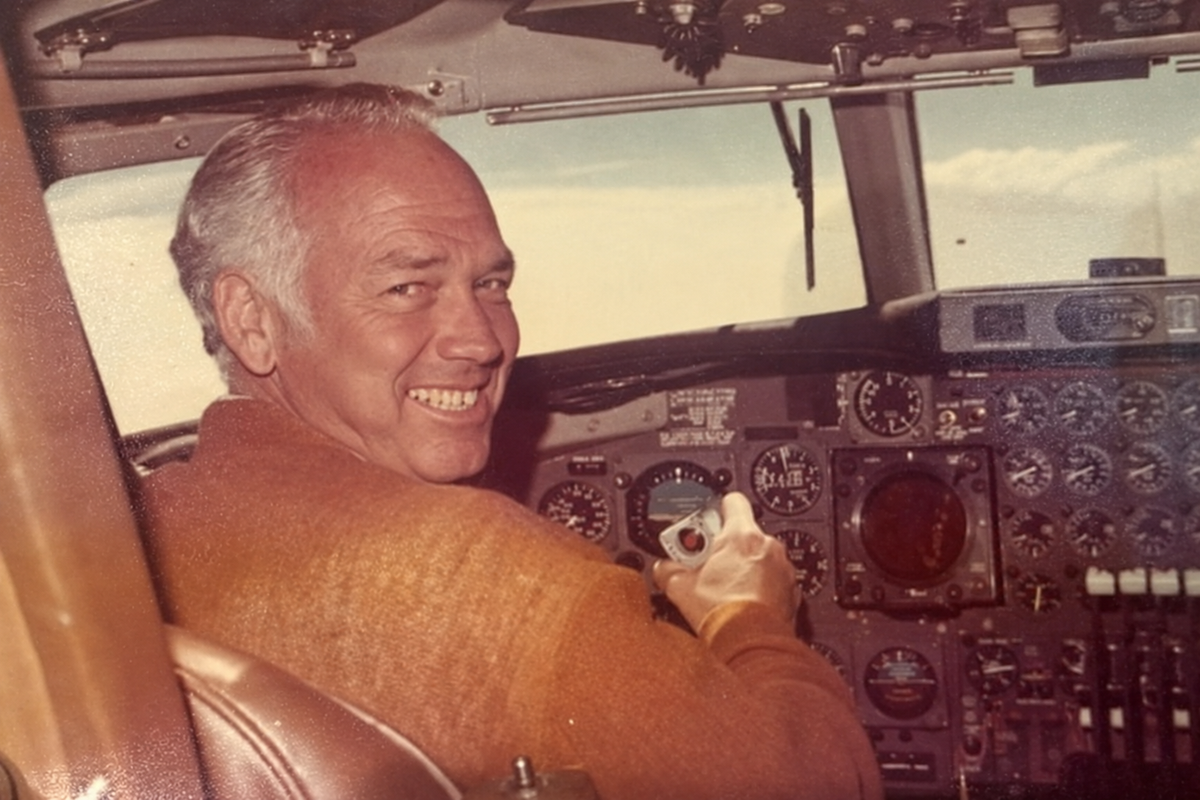
For Ringo, the B-26 was not a historical artifact or an aviation reference discovered years later.
It was an aircraft he knew from the cockpit.
As a young Army Air Corps aviator, Richard “Ringo” Reiner experienced firsthand the preparation, discipline and responsibility that came with flying the Marauder.
That distinction matters.
Ringo Reiner does not borrow aviation history simply because it creates compelling imagery. The connection is authentic. It comes from the life of the man whose name the brand carries.
The aircraft, its instruments, its procedures and the expectations placed on the men who operated it were part of Ringo’s world long before they became references within ours.
We cannot recreate that experience—and we should not try.
What we can carry forward are the principles behind it:
Prepare carefully.
Know what is expected.
Respect the details.
Do the work before it is needed.
Those ideas extend well beyond aviation.
They became part of the standard we associate with Ringo himself.
THE STANDARD OF FLIGHT
“Preparation is what makes precision possible.”
RINGO REINER
THE LESSON
What Aviation Taught Us
Aviation is unforgiving of assumption.
Preparation happens before the moment it is needed. Systems are understood before they are tested. Procedures exist because consistency matters. Small details are respected because their importance may only become clear when something goes wrong.
Those principles shape the way Ringo Reiner thinks about product.
A garment should not depend on one impressive feature. Fit, fabric, construction, proportion, hardware and finishing must work together.
A collar should hold its line because its architecture was resolved correctly.
A button should feel distinctive because it belongs to the garment—not because it demands attention.
A fabric should be chosen because it supports the way the product is intended to wear, move and endure.
The standard is built before the customer ever sees the finished result.
Preparation creates confidence. Precision protects the whole. Purpose gives every detail a reason to exist.
That is the part of aviation Ringo Reiner carries forward.
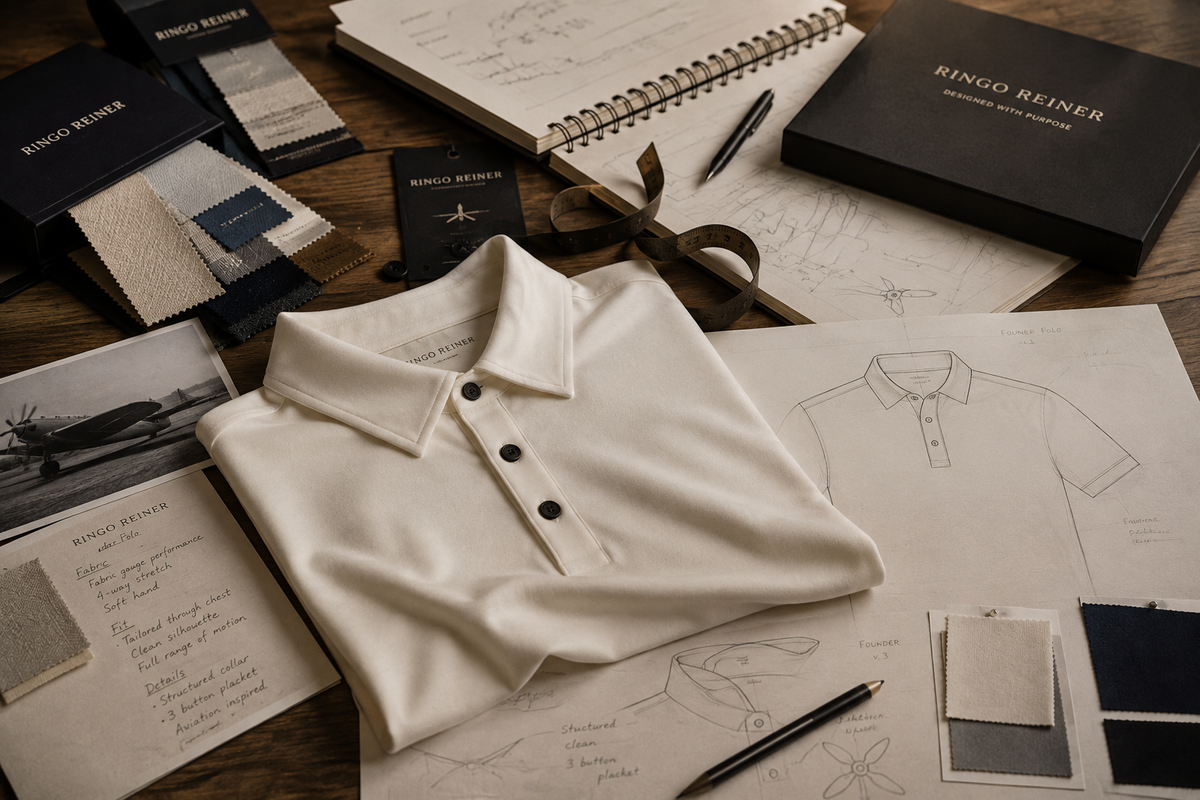
HERITAGE, INTERPRETED
The B-26 Is Present Without Becoming the Product
The B-26 appears throughout Ringo Reiner, but rarely in the most obvious way.
Its influence can be found in the four-blade propeller signature, the language of navigation within the Flight Pattern, the discipline of the Officer Stripe, and the broader emphasis on preparation, proportion, and purposeful construction.
These references are intended to reward a closer look.
They are not meant to turn the garment into memorabilia or make history carry the burden of design.
The product still has to stand on its own.
A customer should be able to appreciate the fit, material, proportion, and restraint of a Ringo Reiner garment even if he never learns the story behind it.
The heritage deepens the product.
It should never substitute for the quality of the product itself.
WHY IT STILL MATTERS
More Than a Piece of History
The B-26 Marauder belongs to another era.
But the principles it represents still feel relevant.
Preparation before action. Precision without spectacle. Respect for systems, materials, and the details that allow the whole to perform as intended.
For Ringo, those ideas were part of a life lived long before this brand existed.
For Ringo Reiner, they remain a useful standard.
The B-26 does not matter because it gives us an aircraft to place on a page.
It matters because it reminds us that good work begins before anyone sees the result.
That every component has a role.
That discipline creates confidence.
And that details deserve attention even when most people will never know they are there.
The aircraft is part of Ringo’s history.
The standard behind it is what we carry forward.
Ringo Reiner
CARRY IT FORWARD
WHAT WILL YOU PREPARE BEFORE THE MOMENT REQUIRES IT?
The lesson of the B-26 is not that every decision carries the same stakes. It is that confidence is usually built before it becomes visible.
Tomorrow, carrying that standard may mean reviewing the work before the meeting, preparing for the person who depends on you, checking the detail no one assigned you or arriving early enough to be fully present.
The setting may be a boardroom, a first tee, a workshop or a dinner table. The principle remains the same: do the work before it is needed, so when the moment arrives, you are ready to meet it.
Read more
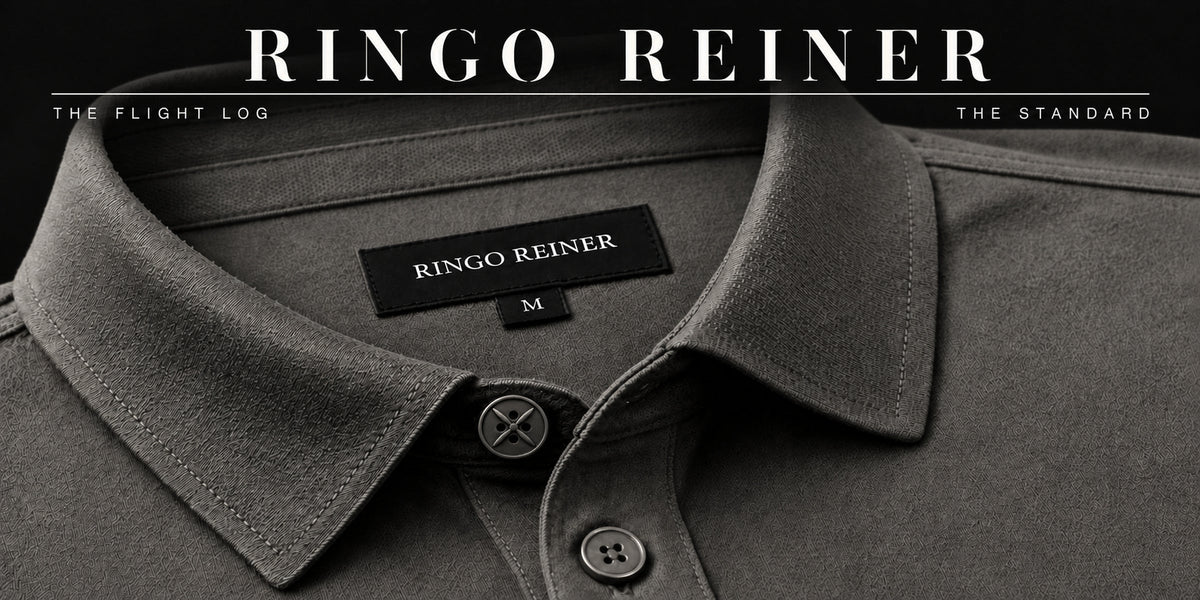
A polo collar should remain composed without demanding attention. Discover how thoughtful architecture, proportion, and integrated collar stays help the Founder Polo hold its line throughout the day.
Read more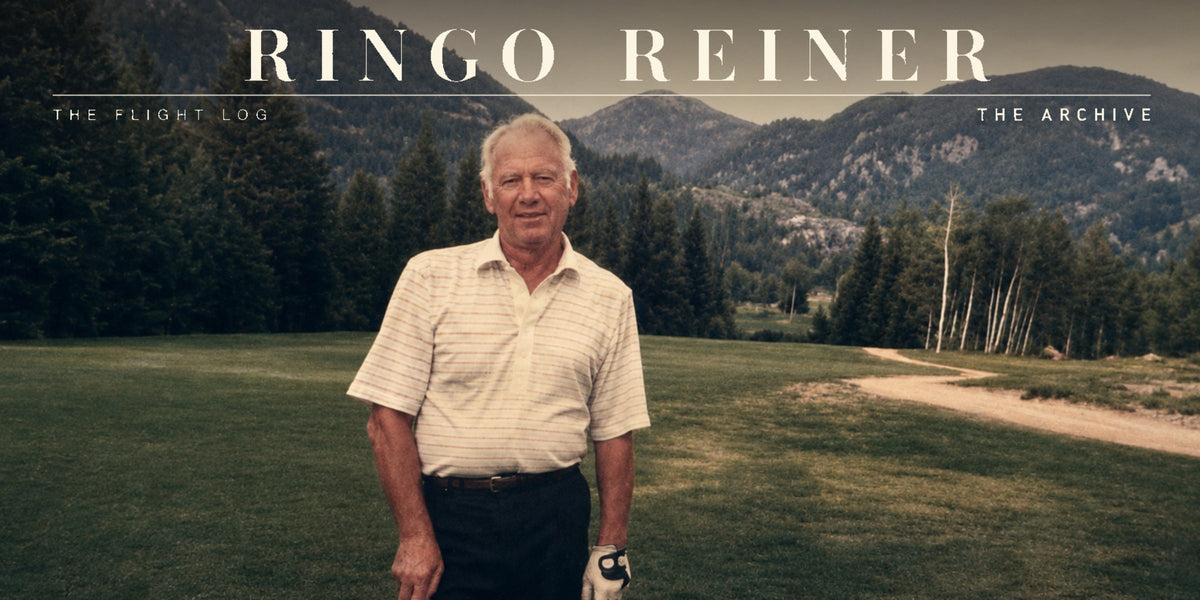
Golf was more than a pastime for Ringo. It was a lifelong game of patience, judgment, friendship and character—values that continue to influence the Ringo Reiner standard.
Read more