
Jimmy Stewart: The Life He Came Home To
There was a house in Beverly Hills where Jimmy Stewart lived with his wife, Gloria, and their four children.
It was a Tudor-style home with a garden next door. Gloria grew vegetables there, on land where another house had once stood. The family stayed in that home for more than four decades.
For a man whose face was recognized around the world, it was a remarkably ordinary place to build a life.
Stewart had flown combat missions over Europe. He had won an Academy Award. He had become one of the most recognizable actors in America.
But when he spoke about the good fortune of his life, he often returned to something closer to home.
His wife. His children. His hometown. The people who had known him long before Hollywood did.
The Man Who Came Back
Jimmy Stewart grew up in Indiana, Pennsylvania, where his father operated the family hardware store.
His childhood was shaped by a small town, close family ties, and the expectation that a person should work hard and conduct himself well.
After graduating from Princeton, Stewart found his way into acting. By the late 1930s, he had become a major Hollywood star.
Then came the war.
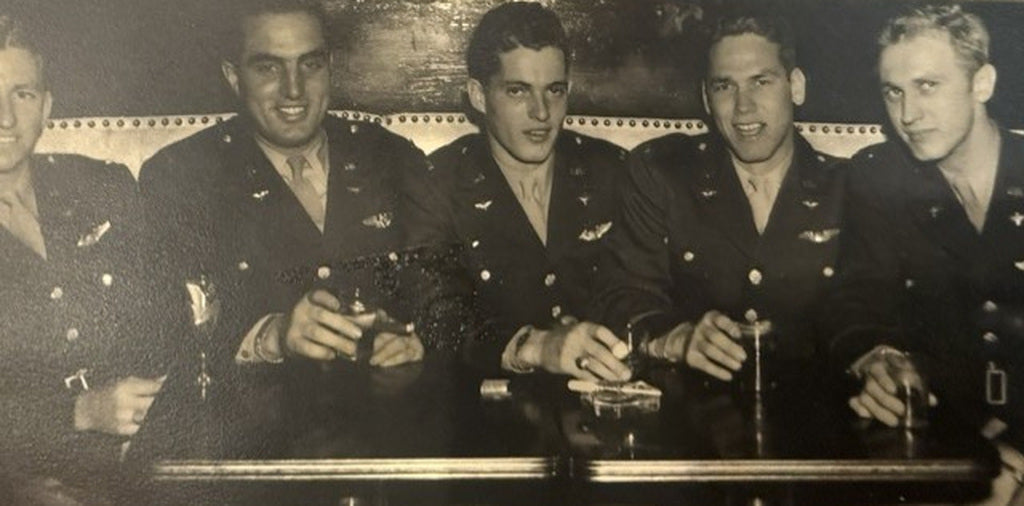
In 1941, Stewart entered military service. He eventually flew B-24 bombers in combat over Europe and rose to the rank of colonel.
He returned to civilian life in 1945 having spent years carrying responsibilities far removed from the movie business.
His first film after the war was Frank Capra's It's a Wonderful Life.
The movie told the story of George Bailey, a man who comes to understand the value of the people around him.
It would become one of Stewart's most beloved performances.
But the life Stewart would build away from the screen was still taking shape.
He was in his forties before he married.
And the family that followed would become a defining part of his years beyond Hollywood.
A Family of Six
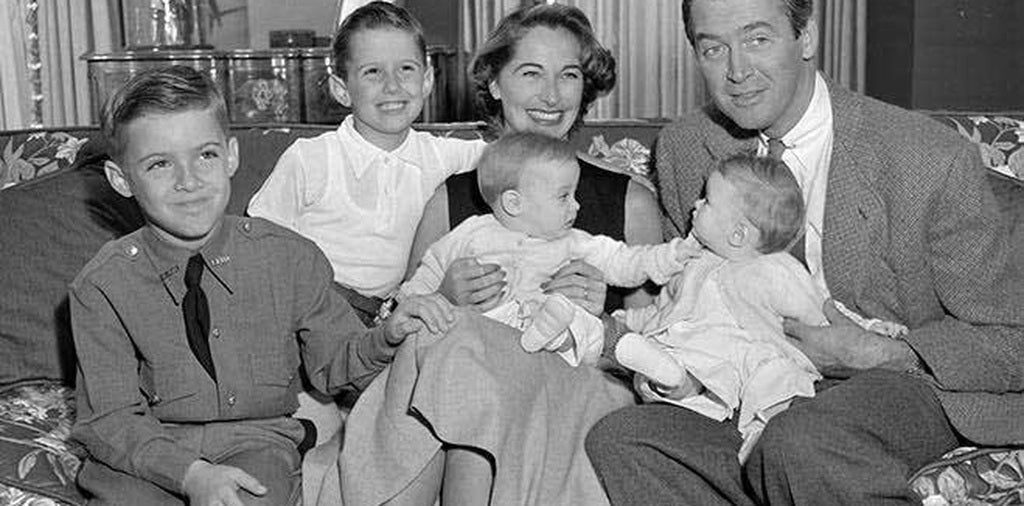
On August 9, 1949, Stewart married Gloria Hatrick McLean.
Gloria was a mother of two young boys, Ronald and Michael, from an earlier marriage.
Stewart adopted them both.
In 1951, the couple welcomed twin daughters, Judy and Kelly.
Their household was now a family of six.
Gloria had a life and interests of her own. She enjoyed outdoor activities, shared Stewart's affection for animals, and devoted considerable time to charitable organizations.
She served on boards supporting wildlife, museums, medical care, and community causes.
At home, the couple shared interests in fishing, travel, and time outdoors.
Their Beverly Hills property became the setting for much of their family life. Gloria cultivated a vegetable garden on an adjoining lot, a small but revealing detail about the home they made together.
It was a place for children to grow up, for friends to visit, and for ordinary days to unfold.
The Presbyterian Historical Society's account of Stewart and his family includes a photograph of Jimmy and Gloria with their four children gathered around a birthday cake.
It is not an image of a movie star receiving an award.
It is a family celebrating together.
And that is what makes it memorable.
Leaving Hollywood at the Door
Stewart's daughter Kelly later described a father who was not especially involved in every practical detail of raising children.
He was not the parent who regularly helped with homework or managed the daily routines.
But she remembered the example he set.
He did not often lecture his children. His manner was quiet, and he generally kept his professional life separate from family life.
Kelly recalled that when her father came home, he left the world of Hollywood behind.
There is something worth considering in that distinction.
Stewart was a public figure whose work required attention, travel, and recognition.
Yet his children remembered a man who did not need to make his home an extension of his career.
He was not a perfect father, and the available recollections do not suggest that he was.
But his family experienced a side of him that audiences rarely saw.
The account of Stewart as a father, including Kelly's recollections, offers a more personal picture than his film career alone could provide.
For his children, he was not simply Jimmy Stewart the actor.
He was their father.
The Years That Asked More of Them
No family moves through life without difficulty.
In 1969, the Stewarts suffered a devastating loss when Ronald McLean, Gloria's son whom Jimmy had adopted, was killed while serving as a Marine officer in Vietnam.
Ronald was 24 years old.
The loss brought war into the family's life in a profoundly personal way.
Stewart, who had survived combat himself, now faced the death of a son in military service.
The family continued on, carrying that absence with them.
Years later, Gloria became seriously ill.
She died of lung cancer on February 16, 1994, at their Beverly Hills home.
Jimmy and their surviving children were with her.
The Los Angeles Times obituary for Gloria Stewart remembered her not simply as the wife of a famous actor, but as a woman with humor, independence, friendships, and a long record of community involvement.
She and Jimmy had been married for more than 44 years.
After her death, Stewart withdrew increasingly from public life.
He died three years later, in July 1997.
What He Chose to Remember
Near the end of his life, Stewart wrote a letter celebrating the creation of the Jimmy Stewart Museum in his hometown of Indiana, Pennsylvania.
He reflected on his childhood, his friends, and the hardware store his father had operated.
He acknowledged the good fortune of his film career.
Then he turned to Gloria and their four children.
He described the love of his wife and the joy their children had brought him as among the great blessings of his life.
It was a simple statement, made by a man who had been given almost every form of public recognition his profession could offer.
Yet when invited to reflect on his life, he did not begin and end with the awards.
He remembered the people.
The letter is preserved by the Jimmy Stewart Museum.
It may be one of the most revealing documents he left behind.
Not because it contains a remarkable declaration.
But because of what he chose to mention.
A hometown.
Old friends.
A wife he loved.
Four children who had brought him joy.
The life Jimmy Stewart lived was not without sorrow, and the family he helped raise was not without its imperfections.
But the photographs, memories, and words he left behind suggest that he understood something important.
A successful career can give a man recognition.
The people waiting for him at home give that success a place in his life.
And long after the applause has faded, those are often the people he remembers.